Gridiron Glossary: Silent Count

A silent count is a signal to snap the football that is used without words.

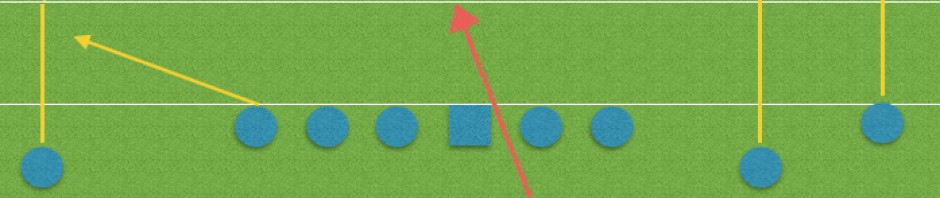
In very loud environments it can be hard for the offense to hear the quarterback call out the snap count.  This can lead to players being slow or offsides.  A silent count tells the center to snap the ball without his having to hear.  If the quarterback is under center, this can be the quarterback pushing on the center.  If the quarterback is in shotgun, he may lift his leg to tell the center to snap.

Most of the offense looks at the ball to tell when the play has started.  Usually the tackles can’t see the ball as well and need to watch the defense, so they don’t always watch.  When they don’t watch, they usually have the guard hold their hand.  When the guard sees the ball snapped he let’s go of the tackle’s hand, letting him know the play has started.


Gridiron Glossary is a resource for football terms that are often used by commentators, coaches and players but rarely defined.  If there is a term you have questions about or a definition you don’t agree with, let me know at billy@thirddowndraw.com.

Posted in Concepts, Glossary | Tagged , | Comments Off on Gridiron Glossary: Silent Count

On Snap Counts

Do you say hut or hike? When you were a kid and snapped the ball in the backyard were you one who said “down, set, hut” or did you say “down, set, hike”?  I was a hut kid.  I don’t know why.  I can’t remember if I learned it first from the other children in the neighborhood or if my coach taught it to me when I started playing as a 5 year old.

If you don’t know what I am talking about, this is the snap count.  At the beginning of most every play in football the quarterback will call out a series of loud and clear interjections ending with the center snapping the ball.  These words can do as little as just tell the center to snap or it can communicate any number of items to the rest of the team.  We, as fans, rarely talk about them, but they do so much, we should.

Coordination

The snap count coordinates the offense.  It gets all of the players on the same page and lets the all act together at the same time.  One of the advantages for the offense is that they get to move first.  The snap count allows that movement to be coordinated and exploits the advantage.

Some offensive snap counts can increase this inherent advantage by using a double word to start the play.  The combination of two words in quick succession, like “hut-hike” can tell the offense to move on the first word and the center to snap on the second.  Technically the entire offense will be offsides, but it should happen so fast it won’t be seen or called.  It will add a fraction of a second to the offense’s advantage.

Another way of using the snap count to the offense’s advantage is to try to draw the defense offsides.  This is commonly done in short yardage situations to get a free five yards without going to the trouble of actually advancing the football.  It is more effective when it is not expected.  Defenses are coached to expect to try to be drawn offsides on short yardage situations.  They are less cautious during random points in the game.

A common technique to draw the defense offsides is the hard count.  A hard count is just a snap count delivered with extra emphasis, volume and speed.  It is an exaggerated cadence designed to provoke the defense to move.  It is sometimes combined with a rush to the line (legal) and the quarterback simulating receiving the snap with his body (illegal).  The rush to the line and the hurried, loud snap count create the impression that the snap is imminent.  It takes discipline for both the offense and defense not to jump offsides.

Changes

Snap counts are used by quarterbacks to communicate changes to the play.  Some changes are big, some small.  A big change could be the entire play.  This is called an audible.  Some offenses use them extensively, others sparingly.

Small changes can be made to the play as well.  If the quarterback sees a blitz coming he may change the protection scheme, meaning he will tell the offensive line to block a different way.  The snap count can be used to change the side of the play.  The offense will be running the same play, but to the right instead of the left.

Hot routes can be incorporated into the snap count.  A hot route is a route that a particular receiver will run against a predetermined coverage.  When that coverage, or defensive look, presents itself, the quarterback will change the receiver’s pattern.  For example, if the defense has a slow corner who  is bad in man coverage, the quarterback may throw him a fade whenever the opportunity exists.  He would use the snap count to let the receiver know to change his route.

Mechanics

Snap counts vary from team to team and can be as simple or complicated as the players and coaches can handle.  The simplest is something like “set, hut”.  It’s hard to forget, but it doesn’t allow the offense to work as many checks and audibles in to it.  In some of the more complicated NFL systems the snap count can have all kinds of words in it.  Most, most!, of them are dummy words which mean nothing and are there to keep the offense off guard.  Others signal that something important is about to come, others are code for plays, others are the plays themselves.  It is as complicated as the offense wants it to be.

If you aren’t in offensive meetings during the week, it will be hard for you as a fan to decode a snap count.  It’s hard for defense who prepare for the offense all week.  Take for example Peyton Manning’s “Omaha” call, which could mean any number of things.  It might have been the code word to let the offense know audibiling is over and they are about to snap the ball.  It might have been a dummy word the next week or the next quarter.  It could have been confirmation to go with the called play.  It could be any number of things, and it could change each week.

Posted in Concepts, Schemes | Tagged , | Comments Off on On Snap Counts

How Long will Clemson dominate South Carolina?

South_Carolina_Gamecocks_Block_C_logo.svgThere’s not a Gamecock alive who is not familiar with South Carolina’s recent five game winning streak.  There’s not a Tiger alive who will not readily point out that Clemson has won the last two, leads the all time series, and is probably going to make it a three game winning streak next year.  Next season doesn’t look good for the Gamecocks.  The question is how long will it take, if ever, for South Carolina to catch Clemson.

Talent

For most observers the 2014 Texas A&M – South Carolina game was a turning point for the program.  That was the game when it became apparent that there was something very wrong in Columbia.  Over the next two seasons it was clear what the problem was: lack of talent.  The success of the late Spurrier era did not translate into sustained success in large part because the difference making playmakers were gone and not replaced.

In the same week that South Carolina was embarrassed by the Aggies, Clemson lost to Georgia in Athens.  The Tigers lost to a better team, which happens, but unlike the Gamecocks, the Tigers weren’t facing a talent deficit each week.  The loss to the Bulldogs was just one game; it wasn’t indicative of a trend.

The remainder of the 2014 season would bear out the two trends.  South Carolina was in a state of talent decline, and Clemson continued to build on their success.  When the two teams met at the end of the season, the result was predictable.  Clemson made some mistakes, didn’t play their best game and won easily 35-17.

If 2014 was the warning, 2015 was the confirmation.  South Carolina hadn’t fixed its problems, and Clemson was getting stronger.  The Gamecocks stumbled to their worst season in a decade and had their head coach resign half way through.  Clemson ran the table undefeated and won a surprisingly close game in Columbia at the end of the season.  No one who watched the two teams play would think the Gamecocks had narrowed the talent gap.

Appearances

In the midst of South Carolina’s recent five game winning streak, it looked like the streak might go on indefinitely.  The Gamecocks were winning 11 games year in and year out.  Some very good Clemson teams entered the game with good records and lost by double digits.  Tiger teams with 9-2, 10-1 and 10-1 records lost by 21, 10 and 14.  For many, it looked like South Carolina’s spot ahead of Clemson was going to be the status quo for years to come.

2000px-Clemson_University_Tiger_Paw_logo.svg

The shocking thing is not that Clemson caught South Carolina.  It’s not inconceivable that they passed the Gamecocks.  The surprise is how quickly they caught, passed and moved away from USC.  Seemingly overnight, Clemson took anther step forward, and South Carolina took two giant steps back.  That is the state of the rivalry at the end of the Spurrier Era.

Now

Today, things look even better for the Tigers.  They are undefeated, the consensus number one team in the country.  They have beaten South Carolina twice in a row and have unquestionably more talent on their roster.  They are a young team who should return much of their talent next season.  Anything the Gamecocks are doing, the Tigers are doing better.  Will things ever change for South Carolina?

Recruiting

The single biggest difference in Clemson and South Carolina is talent.  South Carolina has made moves to fix that issue.  They’ve hired a coach known for recruiting in Will Muschamp, who is assembling a staff of known recruiters as well, and his hiring has stirred optimism in Columbia again.

However, Gamecocks should pump the breaks on expectations of catching Clemson soon.  The talent gap is wide and will take time to overcome.  Head coach Dabo Swinney remains a dynamic recruiter and will certainly continue to bring top shelf talent to the upstate.  Muschamp has a long way to go to close the gap, and it will likely take years.

Look at what happened over the last few days.  Muschamp hit the ground running. He literally flew all over the east coast courting talent and signing some.  The players he signed were important pieces of the South Carolina recruiting strategy.  They are talented and will be an upgrade in Columbia.  Then, at about the same time, Dabo Swinney received commitments from a pair of five star players.  Was there ever a better illustration of the chasm between the programs?  South Carolina upgrades its roster to close the gap with Clemson, and the Tigers upgrade theirs at the same time.

It’s going to take a long time for South Carolina to close the gap with Clemson.  It will happen because nothing is ever permanent in college athletics.  It won’t happen this recruiting cycle or next year.  It may be a few years.  If Will Muschamp can close the gap before Clemson turns its winning streak into five games, he will have been a home run hire.

Posted in Opinion | Tagged , , , , | Comments Off on How Long will Clemson dominate South Carolina?

In Defense of Meaningless Bowls

College football’s bowl season is odd.  Compared to every other sport, it’s very odd.  In what other sport is an entire season played and ended with an exhibition game?  I can’t think of another like it.  In most sports the stakes continue to rise all season.  With a few important exceptions, that’s not true of college football.

This is the time of year when we start to read calls for the end of bowls or the restriction of bowls or some other sort of plan to change the status quo.  Why do we read those articles this time of year?  Mostly because there’s no actual football to write about today.  There aren’t any games until the bowls themselves get started.  Ironic, isn’t it?  Many of the people who write about football, attack the very bowl system that gives them something to write about.

Yes, it’s ironic, but that doesn’t mean that they are wrong.  Most of the criticism of the bowl system originates from the fact that most of the games are meaningless.  They have no impact on any sort of championship, and many times the teams playing in the games don’t really seem to care.  As if that wasn’t bad enough, there have been more bowls added to the slate, more meaningless bowls.  That hasn’t sat well with those who think bowls are a waste of time.

The Best Teams

For a select few teams the bowl games do matter.  In years past it was the BCS championship that mattered; now it’s the playoff bowls that matter.  They don’t matter because they are bowls.  Rather the playoff matters, and it happens to be played in bowls.  There is no question that these games matter, but they aren’t really part of the traditional bowl system; they are a new creation.

A New Creation

The Playoff is a new creation, being only two years old, but the idea that bowls should determine champions is a relatively new idea as well.  Bowls were originally just exhibitions put on by cities for the purposes of drawing some tourists to their cities over the holidays.  See Rose Bowl.  For many years national champions would be crowned by various organizations before the bowls had been played.  That’s how important those bowls were.  They were literally irrelevant to the determination of a national champion.

As time went on, the bowls started to take on some importance.  Fans and teams began to look at the owl results as evidence of they team’s supremacy, and voters followed suit.  Final polls shifted to being released after the bowls had been played, taking those results into account.

In the early 1990s, some of the top bowls got together to create the Bowl Coalition, an agreement to try to create a championship game.  That was replaced by the Bowl Alliance and then the Bowl Championship Series.  The goal of each of these was to create a national championship game, making one bowl incredibly important.  The rest of the bowls were left behind though.  For years they had been de facto less important; now they were clearly on the outside looking in, with no chance of relevance.

Survival

Still the second tier and lower level bowls persisted.  They thrived and more were added.  This year the bowls are at the point where there are so many bowls, there aren’t enough qualified teams to fill them.  Some teams with losing records are having to fill them.  With this situation, some people have asked why we have bowls or should we.  The answer is yes, we should.

The Players

Lost I’m many conversations about college football is the most important group involved in the game: the players.  Going to a bowl game is a reward for players and a perk of major college football.  Players get to go to a vacation destination (usually) and have a week with fun mixed with football.  Usually the week is filled with activities for the players, ranging from service to pure fun. Most players love their bowl week experiences.  It would make little sense to deprive them of this for no real gain.

The Fans

Fans love going to some bowl games.  There are some bowl destinations that almost always sell out.  Fans pack up the family and travel across the country for their own vacation.  Other fans can’t make the trip but cherish being able to watch their team one more time before the long, dark offseason.  It’s fun for many of them, whether they travel or just watch.

The Teams

Going to a bowl is a big advantage over staying home.  When a team qualifies for a bowl it is entitled to practice for the game.  Makes sense, right?  The key is that teams who don’t qualify for a bowl cannot continue to practice.  They cannot continue to improve.  This is especially important for young teams.  For some of those teams an extra three weeks of practice can make the team better.  They may win a game or two more next year because of the extra repetitions they had this year.

The Down Side

What’s the down side?  Is there one?  Are there going to be games on tv that some people don’t care about?  Sure, but is that a reason to stop playing them?  There are all kinds of things on TV people don’t want to watch, but they’re still there.  Is there really any downside to having these games?  Is anyone worse off?  I don’t think so, and with the positives for so many, why mess with the system?

Posted in Opinion | Tagged , , , | Comments Off on In Defense of Meaningless Bowls

You Need a Quarterback

You have to have a quarterback.  College football is reaching the point that the NFL reached years ago.  You must have a great quarterback or you cannot succeed.  For years there were ways around that, but that is no longer the case.

Back and Forth

The 2006 BCS championship game was memorable for many reasons.  Perhaps none of the memories has been as enduring as the domination of the game by the Florida defensive line.  The athletic and fast Gator big men where the herald of the future of college football.  The new way to win in college was to find big strong defensive linemen who ran the 40 in 4.6 seconds.  That was the base model.  You could add elements to the defense, like fast linebackers or physical corners, but the basic, the most important thing was the line.

The rise of the new, athletic defensive lineman forced offenses around the country to respond.  Offenses had to innovate to find a way to counteract the advantage a new generation of players had created.  It has always been this way.  One side of the ball creates an advantage and the other has to adjust to counteract.  This time the offensive answer was the spread.

The Spread

The spread is a term used to describe an offense that is so broad it is almost meaningless.  The spread can be run first and run heavy, or it can be pass heavy.  It can be based on the read option or be a variation on the air raid.  It can be molded to suit many different talents and philosophies.  Generally, the spread is an offense that seeks to force the defense to cover the field horizontally, from sideline to sideline, on every play.

Spread offenses can be power offenses.  They can utilize power blocking and try to run between the tackles.  They can be more finesse and seek to get the ball out to the edge quickly, using hitches, screens and jet sweeps.  They can be what the coordinator needs them to be.  What they cannot be is simple.

Why the Quarterback

There is a myth that the best quarterback for the spread is a mobile, running quarterback who can throw the ball a little.  That’s not true.  A mobile quarterback is needed for most offenses, but a mobile quarterback is not enough.  If all the defense has to prepare for is a running game with little credible passing threat, the offense won’t be successful.  That’s where the  college game is.  Defenses have evolved to the point that it takes a truly multiple offense to compete.  If your offense is one dimensional, your offense is ineffective.

If your offense is going to be multiple, meaning it can effectively run and pass, attack short and long, move the ball inside and outside, then your quarterback must be multiple.  He must be able to read pass coverages and make good passes.  He must be able to read defenders and run the ball well.  He has to audible and check.  He has to be able to do all these things because the simpler he is, the less effective he is.  This is why transcendent quarterback play has become so important.

The decline of the SEC East

It’s no secret that the SEC East has declined in recent years.  It’s odd that a division of the nation’s premier conference that is sitting in one of the most talent rich areas of the nation has allowed itself to fall behind the SEC West and some other divisions around the country.  Could it be that the division that was able to create the defenses of the mid-2000s has not been able to keep up with the subsequent quarterback evolution?

Look at Florida, the flagship program in the East.  What has been missing from the Gators more than anything since Tim Tebow left?  A quarterback.  What has transpired in Gainesville has been a parade of underachieving quarterbacks.  It’s been ironic that some of the best defenses in the nation have been paired with some of the most inept offense.

South Carolina’s success came with Connor Shaw, a multiple quarterback, at the helm.  Without him, they’ve struggled.  Tennessee, Kentucky and Vanderbilt have similar stories.  When they can get strong quarterback play, they’ve had their best success.  Without it?  None.

To be sure bad quarterback play has always doomed an offense.  It seems that it is becoming more common for quarterbacks to fail to perform at the level their teams have needed.  Is that because several teams have recruited poorly for several years?  Or is it that what is being required of the quarterbacks is greater than it has been in the past?  Based on the ways you have to attack a defense, it seems like the latter.

The Exception

There are some schools who have eschewed the wholesale run toward the spread offense and a multiple attack.  Georgia and Alabama are two of the most prevalent.  They have incorporated elements of the spread attack in their offense, and they’ve also held on to plenty of pro style options.  They run the ball between the tackles, out of the I formation often.  They are successful with it, to a point.  Georgia has famously under performed relative to their expectations.  The reason Alabama can do that is that 9 games out of 10, they have superior talent across the field.  They can rely on that as much as their scheme to win games.  Most teams can’t do that.  Most teams have to create a greater schematic advantage, but to do that they need a quarterback who can exploit it, and it doesn’t seem that there are that many quarterbacks around.

Posted in Opinion, Schemes | Tagged , , , , , , , , , | Comments Off on You Need a Quarterback

We all know it; we don’t acknowledge it

The National Championship game will have officials from the Pac-12 conference.  There will not be any teams from the Pac-12 in the playoff, so this should be a good thing, right?  Well, maybe, but why does it matter?  Why does it matter where the officials come from?

Officials Impact Games

This matters because referees impact the game.  They aren’t supposed to, but they do.  They are supposed to be impartial enforcers of the rules.  They are there to ensure the game is played according to the rules.  It’s a simple idea, but in practice, it’s much more complicated.

There are so many rules and so many gray areas that an official’s job isn’t just as simple as watching one player and determining if his actions were legal.  He has to watch many players and he misses some penalties.  Illegal actions take place that aren’t called because they aren’t seen.  Illegal actions take place and aren’t called because the official decides not to call it.

Think of how many penalties are subjective.  Everyone knows about targeting, but also think about holding and pass interference.  The manner in which an official or officiating crew decides to enforce these, or not, changes the game.  It gives advantages to some teams and hurts others.  An officiating crew that decides not to call very many holding penalties will help the offense.  It will especially help an overmatched offense.  It will level the playing field.  Officiating decisions have large impacts on games, and that’s just when they are getting them right.  What about mistakes?

Mistakes happen all the time.  It’s not just a matter of, “we decided to let them play”.  Mistakes happen constantly.  Last weekend North Carolina was called offsides on an onsides kick when everyone was clearly onside.  That’s especially memorable since it happened right at the end of a major game, but the mistakes are prevalent in every game.

The problem isn’t with the mistakes, per se.  It is with our attitude toward the mistakes.  Players are conditioned to believe that officials don’t decide games; players decide games.  This is mostly true, but it ignores reality.  Officials’ calls and non-calls, especially at the end of games, change the game.  They make it more or less likely a team wins.  Failure to acknowledge this or paying lip service to it doesn’t uphold the integrity of the game.  It undermines it.

Undermining the Game

The game can only survive if it is honest.  Players will only want to play if the game isn’t fixed.  Fans will tune in even if it isn’t fixed.  The very existence of the game rests on the premise that the outcome is not predetermined.  Let’s be clear: the games’ outcomes are not predetermined.  There is no conspiracy.  The shortcomings of officials are not the result of concerted effort.

It’s important to be clear about the impact of officials on a game.  Many fans of the game don’t want to talk about the impact officials have.  In their minds acknowledging the role officials play in determining outcomes undermines the game.  They fear that if we recognize the shortcomings and the part these officials play, we will call in to question the legitimacy of the sport.

I disagree.  I think the integrity of the sport is grounded in its honesty.  It must be honest in the sense that the teams on the field should determine the outcome, as much as they can.  It must be honest that other factors, which are not intentional, affect that outcome.  Too many people, who mean well and love the game, would rather pretend that “it all evens out” or “only the players and coaches matter”.  That’s simply not true.

We all know it.

It’s not true, and we all know.  We don’t all like to talk about it, but we all know that officials matter.  It’s why which officials are being used is a story.  If the officials didn’t impact the game, why would anyone care which conference the officials come from?

Saying officials impact the game is not the same as saying officials cheat.  It’s not the same thing as saying the game lacks integrity.  It’s not the same thing as officials are out to get one team or help the other.

There are issues in college football and in officiating.  Too many calls are blown.  Too many mistakes impact games, and those need to be addressed.  They need to be addressed publicly and transparently.  The integrity of the game demands that we acknowledge the uncomfortable fact that officiating matters.  We all know it does; we just don’t like to acknowledge it.

Posted in Opinion | Tagged , | Comments Off on We all know it; we don’t acknowledge it

The Safe Play with Kirby Smart?

Kirby Smart, rumored to be the next head coach at the University of South Carolina, is actually the next head coach at the University of Georgia.  Smart has been one of the hottest names in coaching circles for years.  Had he not decided to return to his alma mater of Georgia, he almost certainly would have had an offer to be the head coach at another SEC East school, USC.  While it seems Smart is a slam dunk hire, there are still plenty of unknowns.

For the Moon

Georgia let go their head coach of 15 years, Mark Richt.  Richt won consistently, but he never achieved the success Georgia is looking for.  Once they realized Richt couldn’t get them where they wanted to go, the Bulldogs smartly parted ways with him.  Right was and is a very, very good coach, and there aren’t many coaches better than he is.  In fact, the odds are, whoever succeeds him won’t do as well, but that’s far from a given.

2000px-UGA_logo.svgThe success of a coaching hire is more difficult to project than is commonly acknowledged.  A coach who is successful at one place may be able to translate that success; he may not.  A stud coordinator may be a stud coach, but just as often it takes years to transition from one role to another.  Program changing players come and go.  Sometimes they come to the right school at the right time, and the coach looks like a genius.  Other times they sign with another school and missing out on a recruit sounds like an excuse.

There are many factors, and when an administration makes a coaching hire, there is simply no way to know what is going to happen.  All an athletic director can do is make a hire that seems to make sense.  He can only hire someone who has a plan, some knowledge and some skills and hope that all of those converge to produce success.  At this point Kirby Smart checks all the boxes and seems like a very good hire, but there’s no guarantee.

Checking the Boxes

As I wrote yesterday in talking about Will Muschamp, a coach needs to be able to do three things to be successful.  He must put together a defense, an offense and find players to execute them.  Smart, it is assumed, can already do two of those three himself.  He has been an effective recruiter for years, and he has been the defensive coordinator for one of the most dominating and consistent defenses in the country.  He only needs to add assistants to help him execute what he knows and find an offensive coordinator to run the offense.

Finding the right coordinator is incredibly important.  College football is in the midst of a transition period.  Hurry up no huddle, spread attacks have moved from novelty to staple.  They come in myriad varieties, and are run with varying degrees of success.  They’re becoming so prevalent because, when run properly, they are causing the most trouble for defenses.  The pro style attack that had been in vogue for years is increasingly being stopped at the college level.

Georiga’s offense has skewed more to the pro-style than the spread for years.  Generally the Bulldogs have had the superior athletes needed to execute the offense, but some have thought the offense held UGA back.  It seems unlikely that Kirby Smart will hire a coordinator to run the same offense, but that’s not certain.  What is certain is that the OC is immeasurably important.  Look at the Will Muschamp years at Florida for an example of what happens when that hire doesn’t produce.

Whose defense?

Kirby Smart has been defensive coordinator at Alabama so long that you can be forgiven for not remembering the other Saban coaches who served as DC.  You can also be forgiven since the list is generally not memorable.  Do these names sound like a who’s who of coaching royalty: Dean Pees, Chris Cosh, Bill Miller, Phil Elamissian and Gary Gibbs?  No?  That’s because they aren’t.  Most of these coordinators haven’t gone on the be head coaches.  The one glaring exception is Will Muschamp, a coordinator of three years under Saban, whose success has been marginal.

So, how is it that Nick Saban’s teams always produce stellar defenses with less than stellar coordinators?  Could it be that Saban himself is the key to the defensive success?  Many think so.  Nick Saban didn’t accidentally build winners everywhere he went, and his defensive prowess is well known.  Many of his coordinators only served one year with him, for whatever that’s worth.

Is it possible that Nick Saban and not Kirby Smart has actually been the brains behind the Alabama defenses of the last few years?  Yes, it certainly is possible, but that begs another question.  If Saban was actually running the defense, why did he keep Smart around for so long?  Eight years is a long time to be defensive coordinator, especially if he is not bringing any value to the table.  For that reason alone, you have to think that Smart was providing something that Saban wanted.  Was he running the defense?  Was it actually Smart’s?  More poignantly, regardless of the answer, can Smart recreate the defensive success from Alabama?

Smart’s Trump Card

No one knows what kind of head coach Kirby Smart will be.  He may be a visionary; he may be a bust.  He will need to replicate the defensive success he had before; that’s why he’s being hired.  He must find good offensive staff to run that side of the ball for him.  Those are the questions marks; here is the known.  Kirby Smart can recruit.

Being able to recruit is a part of being an effective head coach.  It is not, by itself, enough to make a head coach successful.  There are plenty of great recruiters who lost lots of games because they couldn’t turn talent into wins.  But being able to recruit is the only insurance policy a football program has.  You don’t know the answers to the questions about Smart’s head coaching ability in Athens, but if he brings talent, the worst case scenario isn’t that bad.

Assume the worst for a minute.  Assume the offensive coordinator doesn’t do well.  Assume he can’t find a quarterback for his system and injuries take their toll.  Assume Nick Saban was the genius behind his defense, and it doesn’t work in Athens without him.  Assume 3 years from now Georgia has gone 21-15.  That’s the worst case scenario.  What would Georgia do then?  They probably go find another coach, and what does that coach do?  He starts over.  Except, he doesn’t have to start from scratch.  He starts with several years worth of Kirby Smart recruited talent.  He starts with a roster loaded with key players.  That’s a pretty good worst case scenario, and it’s why hiring a career coordinator to run your program isn’t as risky as it may seem.

Posted in News, Opinion | Tagged , , , , | Comments Off on The Safe Play with Kirby Smart?

Gamecocks Should Be Optimistic About Muschamp

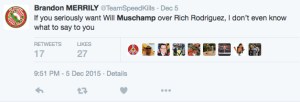
South Carolina will announce Will Muschamp as its head coach Monday morning.  The reaction to news of the hiring has not been positive.  Most people remember an unsuccessful Florida stint and don’t see reasons to believe Muschamp will do better this time around.  They should.
TSK muschamp

No one knows what will happen, not with Muschamp in Columbia, Smart in Athens or Richt in Miami.  There is no way to know what coach, if any, will be successful in a new job.  Past performance is no guarantee of future success.  Everyone knows this, but it bears being repeated.  No coach is certain to be a success; none is certain to fail.  The end of the Steve Spurrier era should be a reminder of that.

TRC Muschamp

This disclaimer is a little superficial, and you can go down the rabbit hole playing a game of “what do we really know”.  We don’t know the future.  There’s no guarantee football won’t be outlawed, etc., and that’s not what I’m trying to do here.  I’m only pointing out that evaluating a coaching hire and projecting future success is more about guessing and thinking than it is about knowing.

Keys to Success

A coach needs to do three things to be successful.  He must have a good offense, a good defense and players to execute them.  Many coaches approach this many ways.  Some coach the offense and turn over the defense to a coordinator, the Spurrier model.  Some coach the defense and turn the offense over to a coordinator, the Saban/Dantonio model.  Some turn both over to coordinators and oversee the program, the Mack Brown/Dabo model.  Most fall somewhere in between where they hand over some of the coordinator and recruiting duties.  Any of the models can work.  One is not superior to the others.

TRC Muschamp

What you have to have for success is a coach that brings something to the table.  He must be able to manage, recruit or coach one side of the ball.  Will Muschamp checks two of those boxes.  He can recruit players.  He can coach defense.  He only has to have an offensive coordinator to be successful, it would seem.

At Florida Muschamp fielded infamously bad offenses, and despite his teams’ defensive prowess, the offenses were generally terrible.  If Muschamp takes the same approach, he won’t be successful anywhere.  But, there’s no reason to think he will.  Why would he do the same thing that got him fired at the last job?  He seems to know that his team must have both a good offense and defense.  That alone should encourage South Carolina.

He Didn’t Win at Florida

The biggest problem with Muschamp is his Florida tenure.  It was not successful; he was fired for losing too much.  Before that he was the hottest assistant in the country. He was the head coach in waiting at Texas.  Everyone put him at the top of their list to be the next big time head coach.  Look at Kirby Smart today.  That was Will Muschamp six years ago.  Florida lured him away from Texas, and the results there weren’t up to par.

Muschamp had an 11 win team who went to the Sugar Bowl, but he had a lot of failures.  He had a team finish 4-8, and he lost to Georgia Southern.  His offenses were chronically inept, and he had some of the worst records in recent Gators history.

That’s all true, and it’s all relevant to how Mushcamp may perform as a head coach.  Everyone is aware of this, but for some people that is the end of the analysis.  “His Florida teams didn’t win enough, so his South Carolina teams won’t either.”

Fortunately for Gamecocks, football isn’t that simple.  Florida’s offenses were bad, why?  Charlie Weis was the first offensive coordinator.  His acumen never translated to college in any of his three stops, not at Florida, Notre Dame or Kansas.  Hiring him was a mistake. Brent Pease and Kurt Roper, the next two coordinators had very sporadic success, but they couldn’t get the personnel in place to be successful, especially at quarterback.  Also, two of those years Florida was decimated by injuries.  http://espn.go.com/blog/sec/post/_/id/86457/gators-hope-injury-woes-are-in-the-past  Every team has injuries, and it’s part of the game, but when they happen, especially in the numbers they happened in Gainesville, it’s going to affect the results.

Florida’s offenses were bad because of poor OC coaching, injuries and inability to recruit a great quarterback.  Ultimately the buck stops with the head coach, but a good offensive coordinator, with some better luck, should be able to fix those issues.  Injuries are unpredictable, but there’s no reason to assume they will happen in large numbers in Columbia.  They could, of course, but you can’t assume they will.  And the quarterback issue?  If South Carolina can hold on to Brandon McIlwain, they should have the quarterback issue resolved for this recruiting cycle.

Columbia is not Gainesville

South Carolina is not the same program as Florida.  It isn’t on the same level, historically or presently.  The belief is that it is easier to win in Gainesville.  All things being equal it is.  Florida is in a more talent rich area with a better tradition, but Florida also comes with expectations and limitations that aren’t present in Columbia.

Florida’s national championship teams have all had great offenses.  The Spurrier Era defined offensive success in the 1990s.  Urban Meyer’s great teams were proving that the spread was not only a viable offense; it was a dominant one.  Florida fans got used to winning that way and demanded offense in the Swamp.  South Carolina fans don’t.

The successes of the Holtz era and the Spurrier era were built on the back of defenses.  Gamecocks are perfectly happy to win games 10-9 or 14-10.  They have no demands that the scoreboard be lit up.  They don’t have the tradition or history to demand such a thing.  They just want to win.  If it’s a dominant defense, a high-flying offense or special teams flukes, they are fine with it.  They just want winning.  In that sense the South Carolina job is easier.

Big Question

The biggest question is can Muschamp fix his mistakes?  Can he field a competent offense?  Can he avoid creating an atmosphere where only defense matters (like he was rumored to have done in Gainesville)?  And in doing so, can he win?  Absolutely, he definitely can.  Will he?  I don’t know.  He might not.  He may make the same mistakes, but I doubt it.  There’s no reason to believe he didn’t learn from his time in Florida.  If he did learn, there’s no reason to believe he can’t win in Columbia.

Posted in Opinion | Tagged , , , , , , | Comments Off on Gamecocks Should Be Optimistic About Muschamp

Playoff What Ifs

c01-sline-logo-30_001-4_3As long as everything goes according to plan, the playoff is set.  Clemson, Alabama and Oklahoma are in.  The last place goes to the Big Ten champion, either Iowa or Michigan State.  Oklahoma’s season is finished.  They are the Big 12 champions and have beaten Baylor on the road, TCU at home and Oklahoma State on the road in the last three weeks.  They’re in.  Clemson needs to beat UNC in Charlotte, and Alabama needs to beat Florida in Atlanta.  That’s what will probably happen, and that’s the plan.  If that happens, it will be a drama free decision day for the committee.  If something changes, it could be very interesting.

If Alabama loses…

If the Crimson Tide lose, they are out.  Being the SEC runner-up with two losses doesn’t get you anywhere.  The question is, who would take their place.  There are two candidates.

Ohio State.  The Buckeyes seem like the logical choice here.  They only have one loss, a three point affair, to Michigan State.  Assuming all else goes according to plan, they will the only one loss team or one of two one loss teams (if Iowa loses).  They have a big name and are the defending national champions.  Their problem would be quality wins.  While they don’t have any bad losses, they only have one real quality win: at Michigan.  That could be a problem for the committee.  If it is, that would open the door for …

Stanford.  The Pac-12 was written off long ago.  Would the committee be interested in having a West Coast team in the playoff?  Stanford would make an attractive candidate.  Assuming they win, they would be the Pac-12 champion.  Their out of conference schedule would be Northwestern, Notre Dame and UCF.  That’s the kind of schedule the committee wants to promote.  They would have a win over Notre Dame and two wins over Southern Cal.  Neither of their losses is good, but they are both Top 15 teams.  It would be controversial, but the committee might be OK with that.

If Clemson loses…

If the Tigers lose, who takes their place?  It would be easy to say North Carolina as the ACC champion, but it might not be that simple.  The Tar Heels would have a quality win against Clemson, but that’s it.  Their only loss would be to 3-9 South Carolina.  That’s a bad loss, and it might keep them out of the playoff.  The only thing they would have going for them is that substituting UNC for Clemson would be easy for the committee.

Ohio State would still be an option.  See above.

Stanford could be one too.  Same.

Iowa could be in.  If the Hawkeyes lose a close game to Michigan State in the Big Ten Championship game, they would be a candidate.  They have wins on the road at Wisconsin and Northwestern.  Those have aged well, and would look good at the end of the season.  A loss to Michigan State wouldn’t be terrible.  Don’t count them out.

Clemson would be the fifth option.  They might make it anyway.  It’s possible that Stanford could take itself out of consideration by losing to Southern Cal.  If that happens, the choices narrow.  If an undefeated Iowa team could lose its championship game and get in, so could Clemson.  While the Tigers’ win over Notre Dame was devalued over the weekend, the FSU win looks better.  It would be hard for the committee to take Clemson over the North Carolina team who just beat them, but they could do just that.

If Clemson and Alabama lose…

This scenario would strengthen Clemson’s hope of losing and going to the playoff anyway.  All the other teams mentioned above would be in the running too.  It would be whatever the committee wants.  They could make up just about anything.

b1gThe Playoff Committee could pick three Big Ten teams.  What if Michigan State beats Iowa on a controversial call or in overtime?  Add to that a Southern Cal win over Stanford.  If the ACC and SEC eliminate their best contenders, could the Big Ten get two teams in?  Could they get three?  Probably not, but imagine the controversy.  The committee would probably take one of the ACC teams, but they could pick three Big Ten teams.  The SEC would explode with indignation.

Posted in News, Opinion | Tagged , , , , , , , , , , , | Comments Off on Playoff What Ifs

What We Learned: Week 12

The Committee Loves Blowouts.  Remember when the BCS instructed the computer rankings to take out margin of victory?  Remember how they didn’t want to see teams run up the score?  The Playoff Committee isn’t like that.  Last year Ohio State made its best case for inclusion by blowing out Wisconsin in the Big Ten championship game.  It seems that several teams learned that lesson.

Oklahoma understood that.  They turned Bedlam into a Blowout.  58-23 makes a 2013_Ohio_State_Buckeyes_logo.svgstatement to the committee.  Ohio State remembered last year’s lesson.  42-13 probably won’t get the Buckeyes in, but if there is a non-champion, they’ll be right there.  Michigan State was watching too.  55-16 was an emphatic way to end the regular season.  If they win next week, they’ll be in.

Nobody Believes in Iowa.  The Hawkeyes have finished an undefeated season and are going to the Big Ten Championship game.  If they win that game, they’ll be in the playoff.  Even so, there is very little confidence in Iowa.  Last week they were a one point favorite over 5-6 Nebraska.  That’s it; they were a solitary point over a team who won’t be going to a bowl game.

Nonetheless, Iowa beat Nebraska.  Nebraska beat Michigan State earlier in the year, so Iowa will be a favorite over Michigan State, right?  Nope, the Hawkeyes are about a 4 point underdog. Nobody believes in them and probably won’t, but as long as they keep winning, who cares?

hFAmbhIh_400x400Pac-12: Now Ruining Everyone’s Playoff Hopes:  The Pac-12 spent the regular season beating up on each other and making sure they don’t have a viable playoff candidate among them.  On the last day of the season, they decided to eliminate another team from outside the conference.  Stanford beat Notre Dame to knock the Irish out of the playoff.  Teams would be wise to stay away from the Pac-12.

Florida’s Luck Ran Out.  The Gators weren’t supposed to be this good this fast.  Jim McElwain looks like the SEC coach of the year, but everyone knew the Gators weren’t quite as good as their 10-1 record suggested.  They were due to have a game where they missed Will Grier so much it hurt.  They were due to have their offense retreat back to the Muschamp days.  They had that day on Saturday in their 27-2 loss to FSU.

That isn’t to take anything away from FSU, who got its best win of the season, and it isn’t to denigrate Florida, who has had a wonderful year.  However, at some point there must be some regression to the mean.  At some point the flaws a team has will be revealed.  It looked like that might wait until next week against Alabama, but the good breaks wore off a week early.

North Carolina is more of a mystery.  North Carolina lost the season opening game logoto South Carolina, and we all knew UNC wasn’t going to be that good.  Then they won a lot of games and looked better.  Then their offense started blowing people out and they looked very good.  On Saturday they held a four touchdown lead and allowed NC State to get back in the game.  A week before the ACC championship game against another Palmetto state team the Tar Heels looked a little off.  Who knows what UNC team will show up next week.

The ACC had a good day.  Traditionally the SEC and ACC have four games against each other on rivalry Saturday.  This year they did, and the ACC won 3 of 4.  Georgia Tech lost to Georgia.  That was expected.  Clemson beat South Carolina.  That, too, was expected.  Then Louisville beat Kentucky, and FSU smashed Florida.  Those weren’t as expected.  It looks like the SEC East has fallen as far as some of us think.

UT_Volunteers_logo.svgTennessee inches forward.  In the off season Steve Spurrier how excited they were in Knoxville over a 7-6 finish to last season.  It was a jab, but it was true.  The Vols finished with a bowl win and a winning record, improving on the season before.  It wasn’t where they wanted to be, but they were moving forward.  Now, they moved forward again.  Butch Jones and Tennessee finished the season 8-4 with a bowl game upcoming.  They finished the season winning their last five.  If they manage to win their bowl game, there will be a lot of hype surrounding this team next year.  We still don’t know if they will deserve it.

Posted in Uncategorized | Tagged , , , , , , , , , , , , , , , , , , , | Comments Off on What We Learned: Week 12